

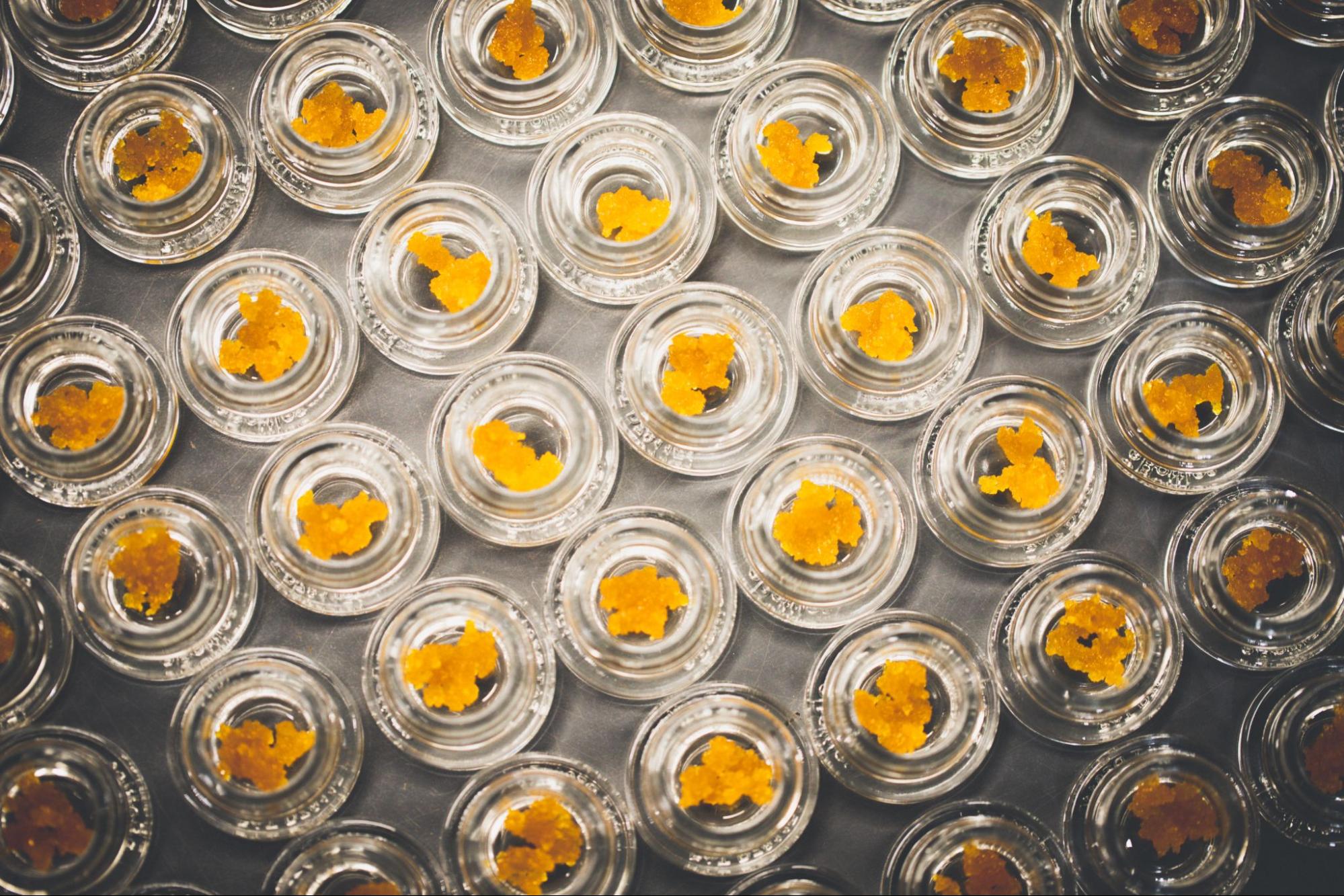
What is hash? What is rosin? These two cannabis concentrates are among the most well-known solventless extracts available today.
Rosin and hash are popular potent cannabis concentrates derived from the plant's trichomes, offering users a flavorful, terpene-rich experience. Hash has ancient roots, while rosin is a modern, solvent-free innovation often made by applying heat and pressure to hash or flower.
Both come in various textures, flavors, and potencies, and can be consumed through smoking, vaping, dabbing, or edibles. When choosing between them, consider factors such as storage requirements, cleaning, consumption methods, and flavor profiles to find the concentrate that best suits your needs.
When it comes to cannabis concentrates, there's no shortage of options to choose from. With so many choices, it can be easy to feel overwhelmed and unsure of where to start. That's where rosin and hash come in—two popular and dependable options that have been enjoyed by cannabis enthusiasts for many years.
In this post, we'll delve into the rich history of rosin and hash, exploring their origins, production techniques, and effects. Whether you're a seasoned cannabis user with years of experience or a newcomer to the scene, we're here to provide you with a comprehensive understanding of what is hash vs. what is rosin in the world of cannabis.
Hash, or hashish, is a highly potent cannabis concentrate derived from the plant's trichomes, the tiny, hair-like structures found on its surface, through mechanical means. Revered for its medicinal and spiritual benefits for centuries, hash traces its roots back to ancient Central Asia and the Indian subcontinent.
The properties of hash can vary greatly, influenced by factors such as the cannabis strain and extraction method employed. These variations affect attributes like color, texture, flavor, and potency, resulting in products that range from crumbly and dry to sticky and pliable. Notable types of hash include finger hash, powdery kief, and hand-rolled bricks, each offering a unique experience for cannabis enthusiasts.
The general principle behind hash production is extracting trichomes from the surface of the cannabis plant. While the fundamentals have remained consistent for centuries, modern techniques have expanded the possibilities considerably. Here are the most common methods:
Dry Sift Hash Method: Mechanical Sieving | Texture: Fine & Powdery
Dry sift hash is produced by separating resin glands from cannabis flowers using fine mesh screens. By agitating the flowers against the screen, dried trichome heads break off and pass through, resulting in a powdery substance that can be mixed into a joint, pressed into traditional hash, or used to make rosin. It's one of the most accessible and widely practiced methods of hash production.
Bubble Hash (Ice Water Extraction) Method: Ice Water & Agitation | Texture: Varies by Grade
Bubble hash is made by immersing cannabis buds in ice water, which freezes and loosens the trichomes. Agitation breaks them off, and the material is then filtered through a series of mesh bags to collect the resin. The result is dried and graded — the highest quality is known as full melt hash, suitable for dabbing directly. Lower grades are typically pressed into rosin.
Hand-Rubbed Hash Method: Manual Collection | Texture: Sticky & Malleable
The oldest and most traditional technique, hand-rubbing involves rubbing live cannabis plants to gather trichomes directly onto the palms. The collected resin is then rolled into balls or pressed into bricks. Varieties like charas from India and Nepal are made this way and carry deep cultural significance.
Solvent-Based Extraction Method: Chemical Isolation | Texture: Oily to Waxy
This method uses chemical solvents — most commonly butane — to isolate trichomes from plant material. The solvent is purged after extraction, yielding products like butane hash oil (BHO). While effective, this approach requires careful handling and professional equipment, and is distinct from the solventless methods above.
Full Melt Hash The Gold Standard of Hash
Full melt, also called six-star hash, represents the highest grade of ice water hash. It melts completely and cleanly on a nail or banger without leaving residue — a sign of exceptional trichome purity. Full melt is best consumed by dabbing, where its complete, flavorful melt can be fully appreciated. Lower-grade hash that doesn't fully melt is typically pressed into rosin instead.
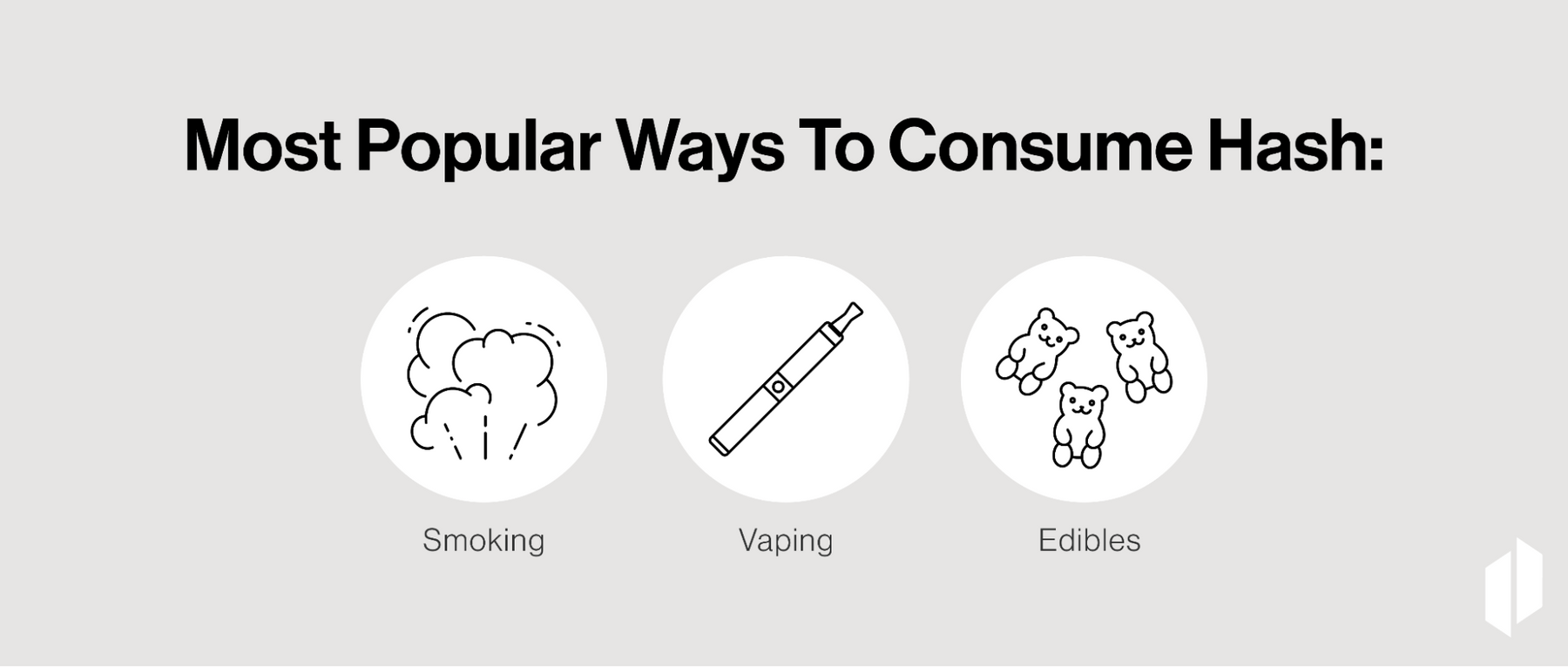
There are many ways to consume hash, and the method you choose ultimately depends on your personal preference. Some of the most popular methods for enjoying hash are:
Introduced in the early 2010s, rosin emerged as an innovative method for producing cannabis concentrates. While hash has a lengthy historical background, rosin was devised as a solvent-free alternative. Made by applying heat and pressure to cannabis flowers or other forms of cannabis such as kief and hash, it has gained popularity in recent years as a cleaner and purer product.
Similar to hash, rosin’s properties can be influenced by the cannabis strain it is created from and its extraction methods. These elements contribute to a diverse array of product outcomes, from glass-like shatter to smooth, buttery consistencies. Among the notable types of rosin are live rosin and solventless hash rosin.
As we've mentioned, rosin production relies on the use of heat and pressure. Now, let's explore the various types of rosin, their manufacturing techniques, and distinct features.
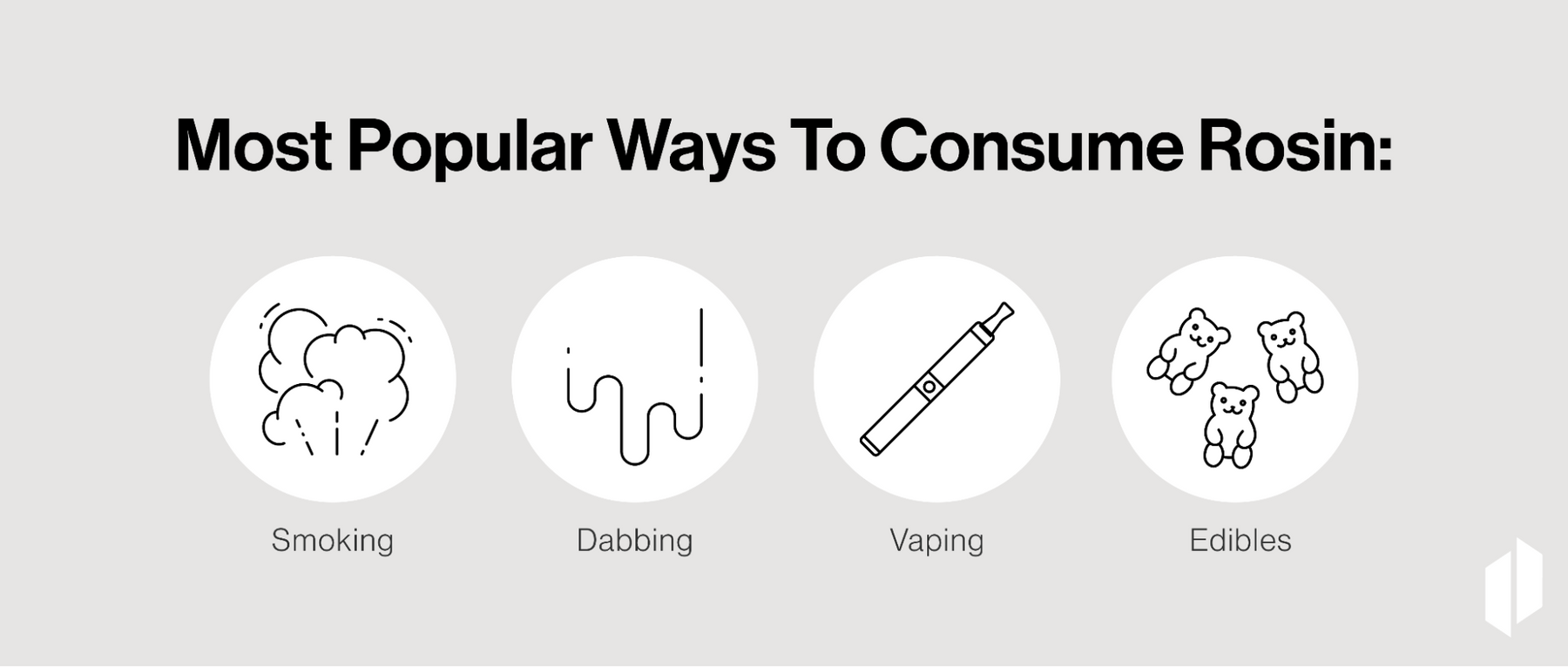
Rosin is a versatile cannabis concentrate that can be consumed in a variety of ways. Each method offers a unique experience in terms of flavor, intensity, and duration of effects. Some popular ways to consume rosin include:
Rosin and hash are two popular cannabis concentrates that share some similarities, such as their potency, but also have distinct differences, primarily stemming from their production methods. In this section, we'll delve into the similarities and differences between rosin and hash, helping you make an informed choice when it comes to selecting the right concentrate for your needs.
As cannabis concentrates, rosin and hash share a number of similarities that make them popular choices among cannabis enthusiasts.
Originating from the trichomes of the cannabis plant, which house the active cannabinoids and terpenes, these concentrates boast distinct flavors and effects. Their higher potency compared to cannabis flower provides users with a more intense experience.
Both rosin and hash can be enjoyed through a variety of consumption methods, including smoking, vaporizing, dabbing, or even adding them to edibles. In addition, they both preserve the unique terpene and cannabinoid profiles of their source strains, offering a diverse spectrum of flavors and effects to cater to individual preferences.
While rosin and hash share similarities as cannabis concentrates, there are key differences between them as well, primarily stemming from their extraction methods.
Hash production typically involves mechanical separation, using methods like dry sifting, ice water extraction, or hand-rubbing to isolate the trichomes from the plant material. Rosin extraction, on the other hand, is produced by applying heat and pressure to cannabis flowers, kief, or hash. This process results in a solvent-free concentrate, making it a popular choice for those seeking a purer product.
The properties of rosin and hash, such as color, consistency, and texture, can vary due to the differences in their extraction techniques and the cannabis strains used. Rosin tends to have a more diverse range of consistencies, from translucent shatter to creamy, butter-like textures while hash generally has a more solid, compressed appearance and can be crumbly and dry or sticky and malleable.
Overall, both concentrates offer a wide range of flavors and effects.
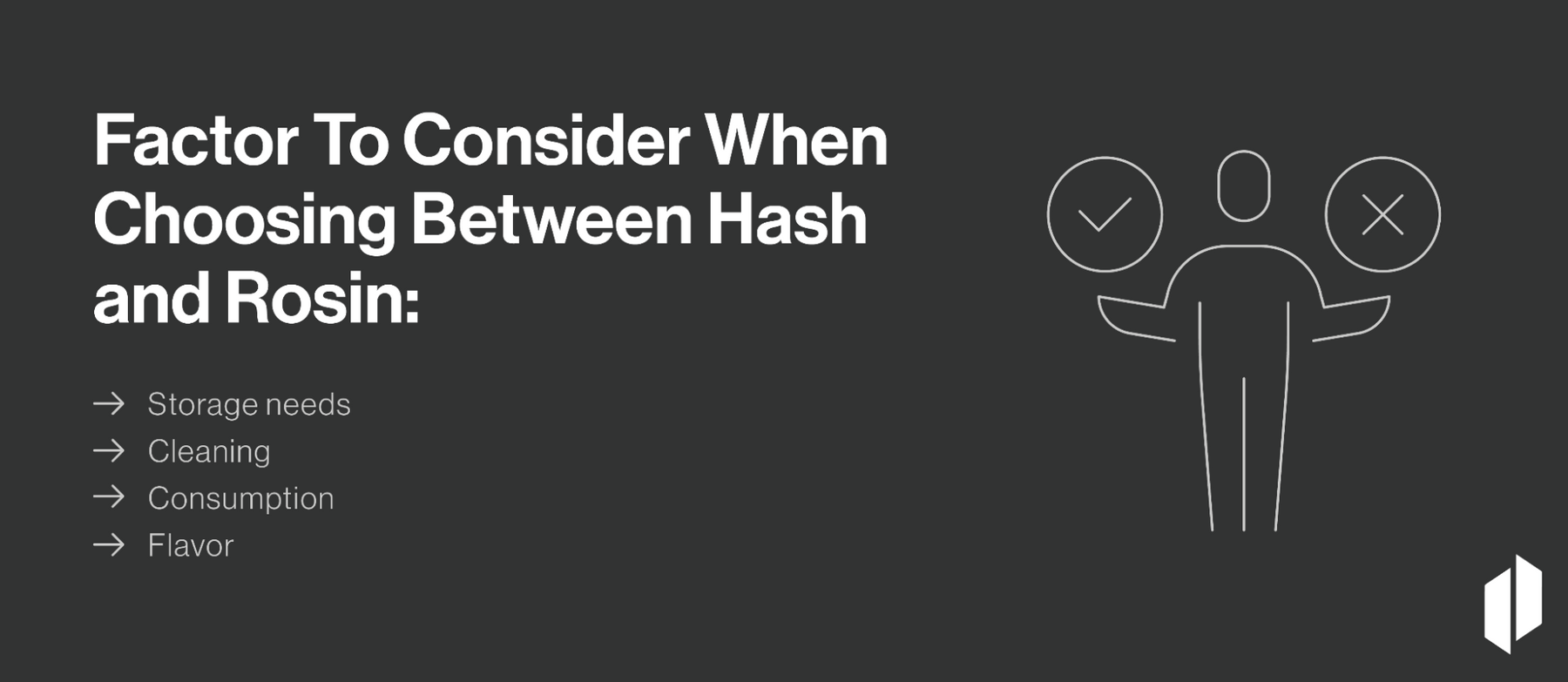
When deciding between rosin and hash, several factors come into play, including:
Ultimately, the choice between rosin and hash depends on your preferences and your desired experience.
